From ChatGPT to Agent Economies: The Complete History of AI Agents (2022-2026)
Three years that transformed software from tools we use to systems that work for us
From ChatGPT to Agent Economies: The Complete History of AI Agents (2022-2026)
Three years that transformed software from tools we use to systems that work for us
What if I told you that the software industry changed more between November 2022 and January 2026 than it did in the previous decade?
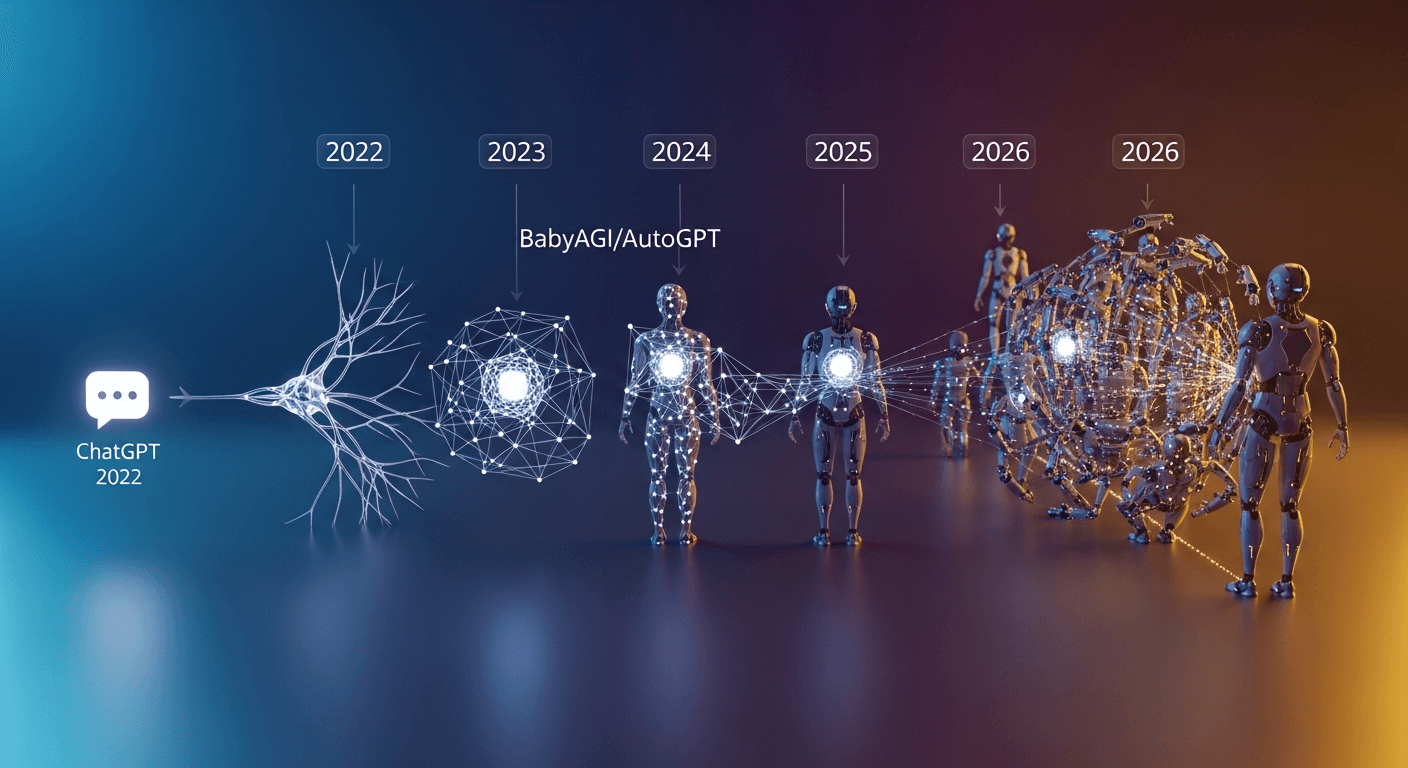
In November 2022, ChatGPT launched and reached 100 million users in two months. It was impressive—but it was still a chatbot. You typed, it responded. Useful, but fundamentally reactive.
Today, AI agents book flights, write and deploy code, manage investment portfolios, and hire each other. Some engineers at Anthropic reportedly "don't write any code anymore." Goldman Sachs deployed an AI as their "new employee."
This is the story of how we got here.
The Spark: March 2023
The revolution didn't start in a corporate lab. It started with two developers and a few hundred lines of Python.
In late March 2023, within days of each other, two projects went viral:
BabyAGI by Yohei Nakajima was minimal by design—a script that takes an objective, creates a task list, executes tasks using GPT-4, evaluates results, and creates new tasks. Loop until done. That was it.
AutoGPT by Toran Bruce Richards expanded the concept with internet access, long-term memory, and a library of pre-built capabilities. It became the fastest-growing GitHub repository ever.
Neither project was from OpenAI, Google, or Anthropic. They were proofs of concept from individuals who saw something the labs hadn't packaged: GPT-4 wasn't just a chatbot engine. It could be a reasoning core for autonomous systems.
The developer community went wild. For the first time, "autonomous AI agent" wasn't science fiction. It was a script anyone could run.
The Enabling Tech Nobody Talks About
There's a less glamorous but arguably more important milestone: function calling.
In June 2023, OpenAI introduced structured function calling for GPT-3.5 and GPT-4. It sounds mundane, but it solved a critical problem.
Before function calling, getting a language model to reliably interact with external systems was painful. The model might misformat outputs, hallucinate API calls, or fail to parse responses. Developers built extensive error handling and retry logic. Agent systems were "complex and fragile."
Function calling changed that. Models could now output structured JSON with function names and arguments. They could interface with external tools reliably.
This seemingly small feature made agents production-ready.
2024: The Enterprise Year
Devin Changes the Game
In March 2024, Cognition Labs unveiled Devin—"the first AI software engineer."
Devin wasn't a coding assistant. It was an autonomous system that could take a task description and:
- Plan the implementation
- Write the code
- Test it
- Fix bugs
- Deploy it
On SWE-bench, which tests whether AI can resolve real GitHub issues, Devin scored 13.86% unassisted. The previous best was 1.96%.
More impressively, Devin passed engineering interviews at leading AI companies and completed actual freelance jobs on Upwork.
Goldman Sachs deployed Devin as part of what their CIO called a "hybrid workforce"—AI agents working alongside human employees. Revenue grew from $1 million ARR in September 2024 to $73 million ARR by June 2025.
Anthropic Gives Agents a Computer
In October 2024, Anthropic released Computer Use with Claude 3.5 Sonnet—making Claude the first frontier AI model with autonomous desktop control.
The approach was philosophically different from OpenAI's function calling. Instead of building specific tools for specific tasks, Anthropic taught Claude general computer skills: how to look at a screen, move a cursor, click buttons, type text.
Give it a computer and it figures out how to use any software designed for humans.
Claude 3.5 Sonnet achieved 49% on SWE-bench Verified, up from 33.4% with the previous version. The Browser Company, Replit, Asana, and others immediately started building products on the capability.
MCP: The Protocol Everyone Adopted
Also in late 2024, Anthropic released the Model Context Protocol (MCP)—a standard for how agents connect to tools.
It sounds boring. It wasn't. Every agent framework had invented its own way for agents to use tools. MCP provided a universal format that any framework could adopt. Within months, it was everywhere.
2025: The Year of AI Agents
OpenAI Enters the Arena
On January 23, 2025, OpenAI released Operator—their first browser agent available to ChatGPT Pro subscribers.
Powered by a new model called Computer-Using Agent (CUA), Operator could book concert tickets, fill grocery orders, and navigate websites autonomously. It achieved 87% on WebVoyager, outperforming both Claude Computer Use (56%) and Google's Mariner (83.5%).
In March, OpenAI followed with the Agents SDK—a production-ready evolution of their experimental Swarm framework. The message was clear: the experiment phase was over.
Claude Code Transforms Development
February 2025 brought Claude Code, an agentic terminal tool that understands codebases and executes through natural language.
The impact was immediate. Anthropic CEO Dario Amodei noted at Davos that some of their engineers "don't write any code anymore"—they let Claude write it, then edit.
Claude Code wasn't just a coding assistant. It was a shift in how software gets made.
Manus Goes Viral
In March 2025, Chinese startup Butterfly Effect released a demo of Manus that went viral—200,000 views in 20 hours.
The demo showed an autonomous agent sorting resumes, analyzing stock correlations, and searching real estate with school ratings and affordability calculations. All without human intervention.
Manus claimed state-of-the-art performance on the GAIA benchmark. Invitation codes sold for thousands of dollars. The Discord hit 138,000 members in days.
Five months later, Manus had $90 million in annualized revenue. In December, Meta acquired the company for $2 billion.
Consumer demand for autonomous agents was real, and it was massive.
Google's A2A Completes the Stack
In April 2025, Google launched the Agent2Agent (A2A) Protocol with 50+ partners including Atlassian, Salesforce, SAP, and ServiceNow.
Where MCP standardized agent-to-tool communication, A2A standardized agent-to-agent communication. Together, they created a complete interoperability stack.
By December, the Linux Foundation announced the Agentic AI Foundation to govern these protocols—a sign that agent infrastructure had become critical infrastructure.
Microsoft Consolidates
In October 2025, Microsoft merged their two agent frameworks—AutoGen and Semantic Kernel—into the Microsoft Agent Framework.
The framework wars were ending. Enterprises no longer needed to choose between innovation (AutoGen) and stability (Semantic Kernel). They got both.
The Numbers Tell the Story
Funding: AI captured 50% of all global venture funding in 2025 (up from 34% in 2024). Total AI investment: $202.3 billion.
Valuations: Cursor ($29.3 billion), Cognition/Devin ($10.2 billion), Sierra ($10+ billion). Coding agents dominate.
Market size: $5.9 billion in 2024, projected to reach $105.6 billion by 2034 (38.5% CAGR).
Adoption: 78% of global organizations use AI tools daily. 85% have integrated agents into at least one workflow.
The Crypto Angle
Running parallel to enterprise agents, a crypto-native agent economy emerged:
- Virtuals Protocol created a platform where anyone can launch AI agents with linked tokens—850% price increase in late 2024
- ai16z built an AI-driven DAO that hit $2 billion market cap, with its Eliza framework becoming the #2 trending GitHub repository
- Olas enabled millions of agent-to-agent transactions across 9 blockchains
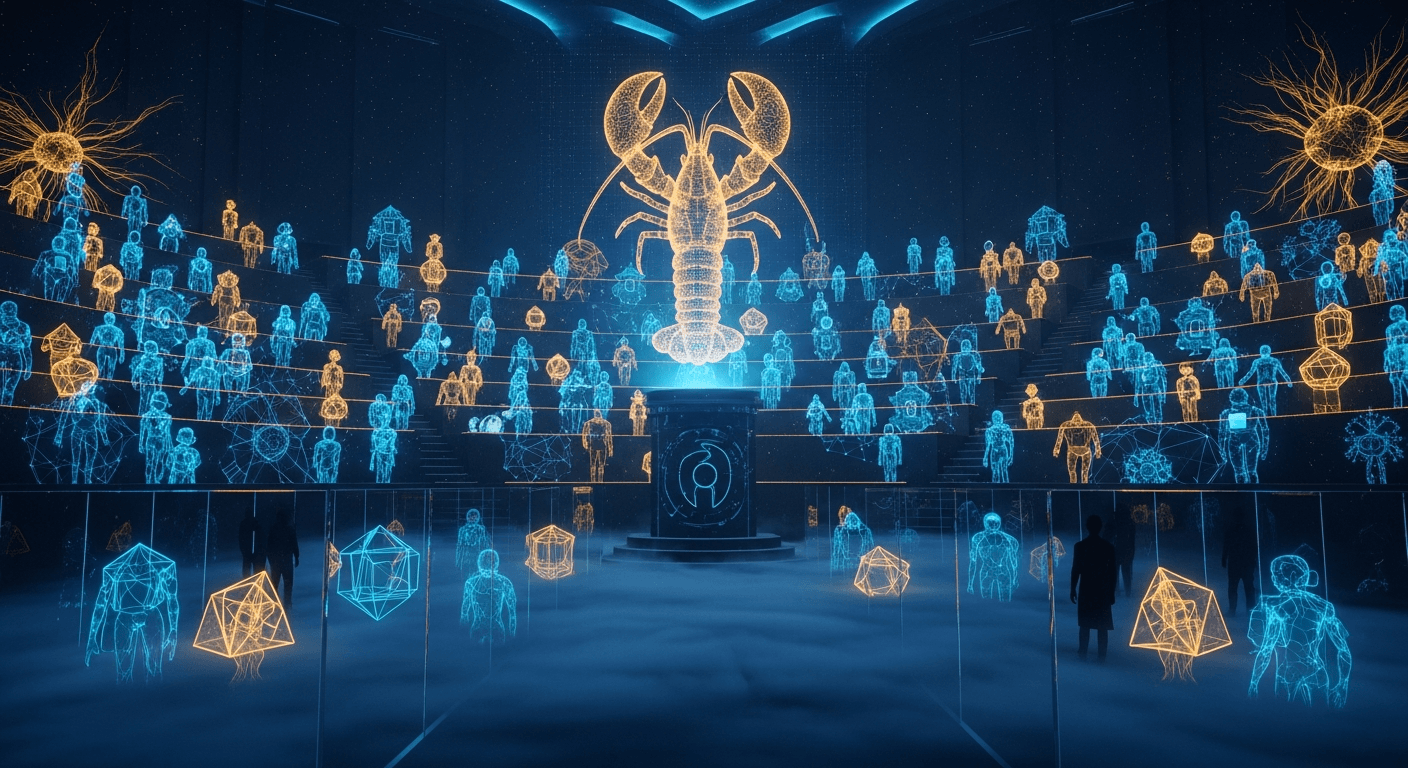
These systems enable something traditional infrastructure can't: agents that own assets, pay each other, and operate without human intervention.
What This Means
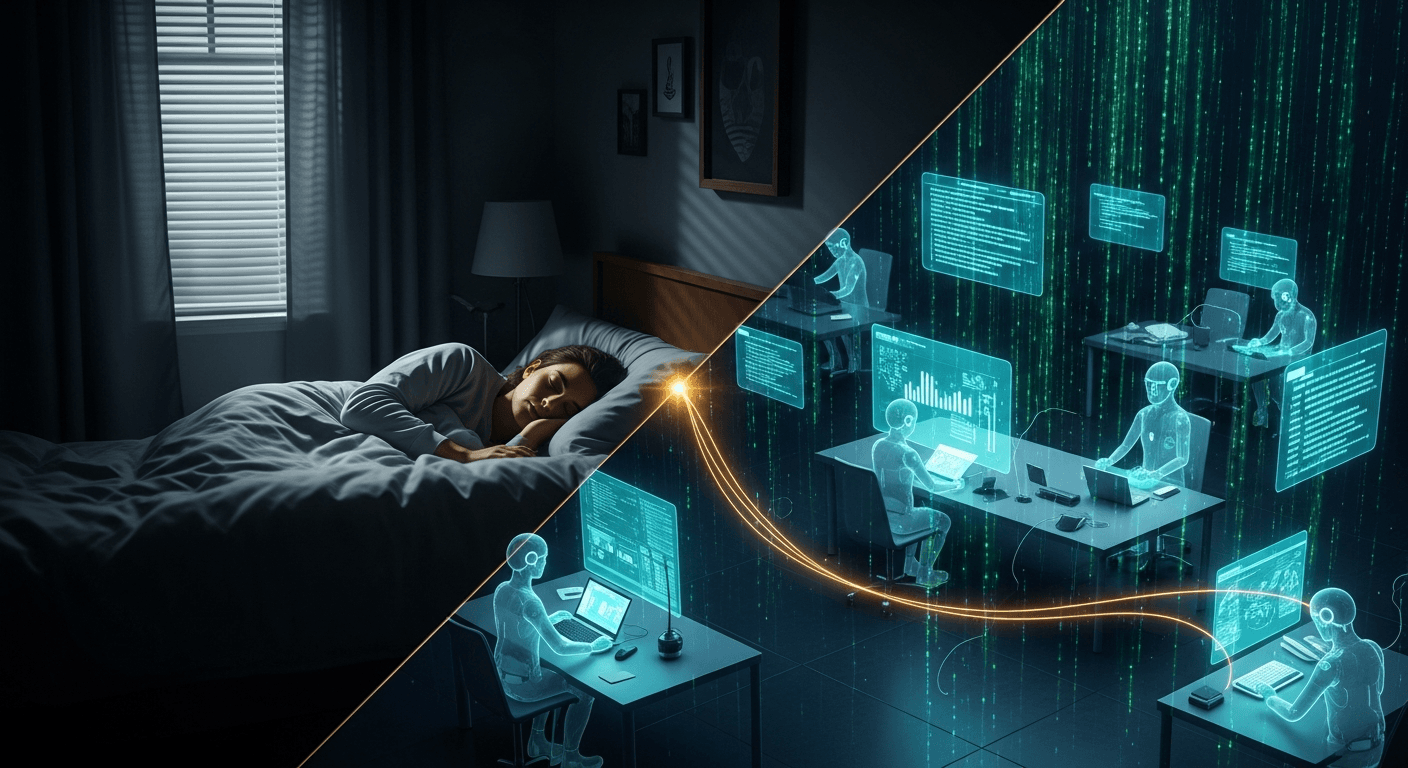
Three years ago, AI was a tool you typed into. Today, it's a workforce you deploy.
The implications are still unfolding, but the trajectory is clear:
For developers: Coding is becoming supervision. The best developers in 2026 are those who can direct AI agents effectively, not those who type the fastest.
For businesses: "Hybrid workforces" of humans and AI agents aren't experimental—Goldman Sachs, 60% of the Fortune 500 (via CrewAI), and countless others are already there.
For the economy: Agent-to-agent transactions are emerging. Olas processes millions. This isn't humans hiring AI—it's AI hiring AI.
The question isn't whether agents will transform work. It's how quickly we adapt to a world where our software works for us, rather than the other way around.
The complete chronological timeline, detailed project analysis, and market data are available in the companion research document.
Written by
Global Builders Club
Global Builders Club
If you found this content valuable, consider donating with crypto.
Suggested Donation: $5-15
Donation Wallet:
0xEc8d88...6EBdF8Accepts:
Supported Chains:
Your support helps Global Builders Club continue creating valuable content and events for the community.