Why Your AI Doesn't Know You (And How to Fix It)
Personal AI Infrastructure is transforming how we work with AI—from amnesiac chatbots to systems that actually remember, learn, and grow
Why Your AI Doesn't Know You (And How to Fix It)
Personal AI Infrastructure is transforming how we work with AI—from amnesiac chatbots to systems that actually remember, learn, and grow
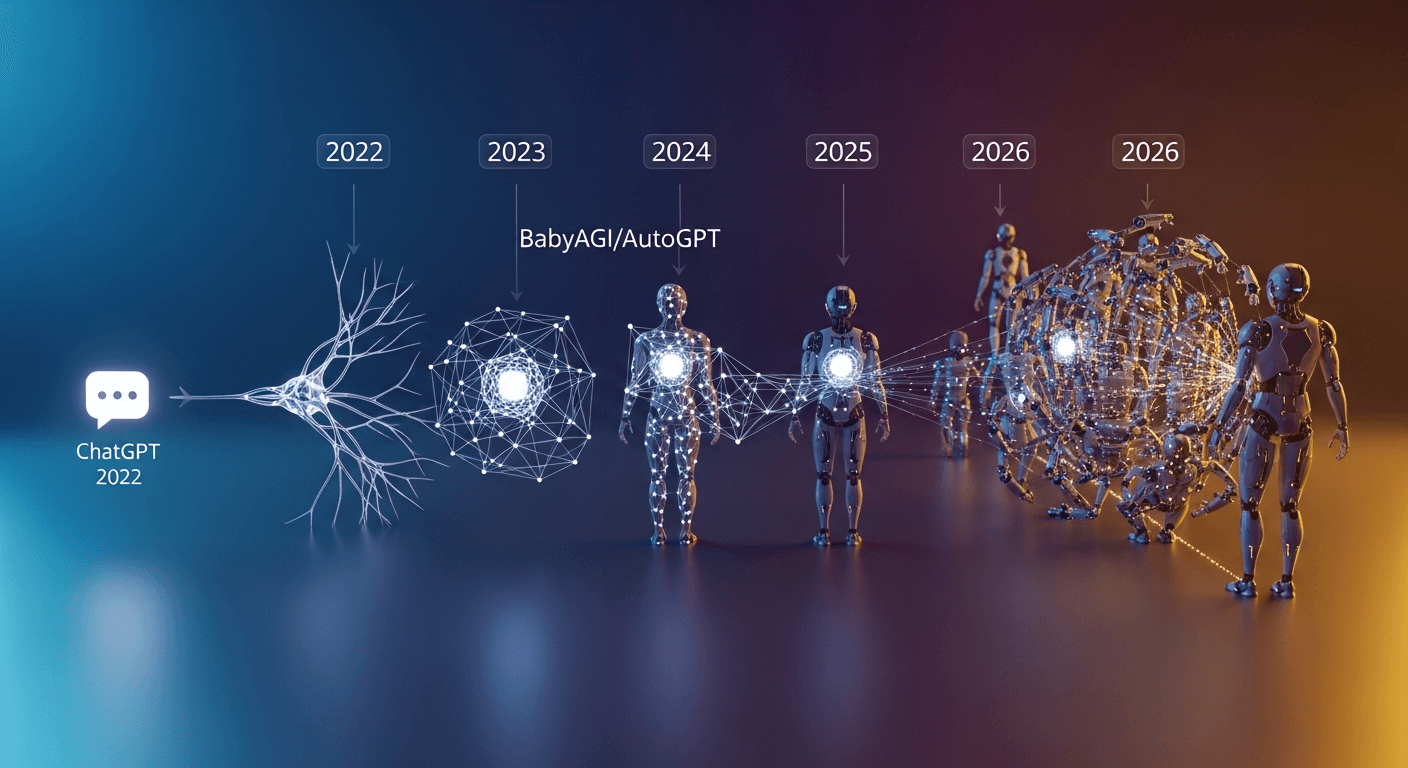
Every time you open ChatGPT, you start from zero. Your preferences, goals, workflows, writing style—gone. You've had this conversation before. Many times. And you'll have it again tomorrow.
This is the fundamental limitation of current AI assistants: they're brilliant strangers. Incredibly capable, but they don't know you. And they'll forget everything the moment you close the tab.
Personal AI Infrastructure (PAI) changes this equation entirely.
What is Personal AI Infrastructure?
PAI is an architecture pattern for building AI systems that maintain persistent knowledge about you—your goals, preferences, workflows, and history. Instead of explaining yourself every session, you encode your methodology once. The AI remembers forever.
The concept was pioneered by security researcher Daniel Miessler, whose open-source implementation has gained 6,000 GitHub stars and spawned an active community. But PAI isn't a product—it's a pattern that's being validated by industry analysts at Deloitte, IBM, and Goldman Sachs as the next evolution of AI interaction.
The core insight is counterintuitive: scaffolding beats model intelligence. A well-designed system with an average AI model consistently outperforms a brilliant model with poor architecture. The model is becoming commodity. Orchestration is the new competitive advantage.
The Skills Revolution
Skills are the foundation of personalization. Each Skill is a self-contained package that teaches your AI how you work in a specific domain.
Here's what a Skill looks like in practice:
~/.claude/Skills/Blogging/
├── SKILL.md         # When to use this, domain knowledge
├── Workflows/       # Step-by-step procedures
└── Tools/           # Scripts and utilities
When Miessler says "publish the blog post," his AI knows: use this proofreading style guide, generate headers in this aesthetic, create WebP thumbnails, deploy to Cloudflare with this command, and commit with this message format.
All of that encoded once. Executed on command. Forever.
This is the shift from "prompt engineering" (crafting the perfect request each time) to "skill engineering" (encoding your methodology permanently). The knowledge compounds—each Skill you build saves exponential future time.
The PAI implementation includes 65+ Skills covering research, security analysis, content creation, development workflows, and personal infrastructure. When new developers join the community, they don't start from scratch—they inherit proven patterns.
Memory Makes the Difference
Current AI assistants are fundamentally amnesiac. Each conversation starts fresh. True personal AI requires memory that persists, organizes, and feeds back into future interactions.
PAI implements a three-tier memory system:
- Hot memory: Current session context
- Warm memory: Recent learnings and decisions
- Cold memory: Archived historical knowledge
The Universal Output Capture System (UOCS) automatically logs session transcripts, research findings, decisions made, and code changes. Hooks trigger at lifecycle events—session start, tool use, task completion—to ensure comprehensive capture.
The result: your AI doesn't forget what you've learned together. Come back to a project after three months? The full history is there. Decisions you made and why. Learnings you discovered. Code evolution tracked.
Goldman Sachs predicts personal AI agents will "learn continuously to support humans in household management, health, daily communication, and entertainment in deeply personalized ways." The differentiator between that future and current chatbots is persistent memory.
MCP: The Universal Connector
The Model Context Protocol (MCP), announced by Anthropic in November 2024, provides a standardized way to connect AI systems to external tools and data. Think of it as "USB-C for AI applications."
Before MCP, every AI system needed custom integrations with every service—the "M x N problem" that made scaling painful. MCP solves this with a universal protocol: three primitives (tools, resources, prompts) that any AI can use to interface with any compliant service.
Adoption has been remarkably fast:
- OpenAI integrated MCP in March 2025
- Google DeepMind, Block, and Apollo followed
- Development tools (Zed, Replit, Codeium, Sourcegraph) built integrations
- In December 2025, Anthropic donated MCP to the Linux Foundation
For PAI builders, this means you can create custom MCP servers for your personal data—blog archives, calendars, knowledge bases—and integrate enterprise systems without writing custom code. The integration problem is being solved at the protocol level.
The Numbers Are Compelling
Deloitte projects the autonomous AI agent market will reach $8.5 billion in 2026 and $35 billion by 2030. With better orchestration, that could reach $45 billion.
But here's the warning: Deloitte also predicts over 40% of current agentic AI projects could be cancelled by 2027. Not because of model limitations—because of poor orchestration.
The readiness gap is stark:
- 80% of organizations believe they have mature basic automation
- Only 28% feel the same about automation combined with AI agents
This gap is the opportunity. Organizations building orchestration infrastructure now will gain sustainable advantage. Those waiting for "AI to get better" will find the models were never the bottleneck.
Your Role is Changing
IBM's 2026 trend analysis identifies a fundamental shift: "As AI agents take over execution, human roles shift fundamentally. The core human skill becomes intent-setting, with clearly defined goals and constraints."
The progression is from "human-in-the-loop" (approving each action) to "human-on-the-loop" (supervising while AI acts). Eventually, for trusted domains, "human-out-of-the-loop" (AI acts autonomously).
PAI prepares you for this future. You can't build effective Skills without learning to articulate clear goals, define success criteria, and design verification steps. The system is implicitly a training program for the new economy.
Getting Started
PAI is open source and documented. Here's how to begin:
- Install Claude Code - The foundation that PAI builds on
- Create one Skill - Start with a workflow you repeat frequently
- Encode your preferences - Write a SKILL.md that captures how you work
- Add basic memory - Start logging session outputs
- Expand gradually - Each Skill teaches patterns for the next
The repository at github.com/danielmiessler/Personal_AI_Infrastructure includes 23 installable packs covering skills, hooks, memory systems, and voice integration.
Fair warning: the current implementation is power-user territory. You'll need command-line comfort and some TypeScript familiarity for advanced customization. But the patterns are learnable, and the community is active.
The Paradigm Shift
Personal AI Infrastructure isn't about making AI smarter—it's about making AI yours.
The transformation is from "What can AI do?" to "What do I want to achieve, and how can AI magnify my ability to achieve it?" This goal-orientation, combined with persistent memory and personalized context, creates a fundamentally different relationship with technology.
Not a tool you use. A system that knows you and grows with you.
The question isn't whether personal AI infrastructure becomes standard. The early adopters are already building. The enterprise products are launching. The protocols are standardizing.
The question is whether you'll build yours before the paradigm shift leaves you behind.
Sources: Daniel Miessler's PAI implementation, Deloitte TMT Predictions 2026, IBM Tech Trends 2026, Goldman Sachs AI Outlook, Anthropic MCP documentation, arXiv research on AI agent memory
Written by
Global Builders Club
Global Builders Club
If you found this content valuable, consider donating with crypto.
Suggested Donation: $5-15
Donation Wallet:
0xEc8d88...6EBdF8Accepts:
Supported Chains:
Your support helps Global Builders Club continue creating valuable content and events for the community.