Kimi K2.5: The Open-Source AI That Just Changed Everything
Moonshot AI released the first open-source model to genuinely compete with GPT-5 and Claude—with Agent Swarm, native multimodality, and 10x cheaper pricing.
Kimi K2.5: The Open-Source AI That Just Changed Everything
The first open-source model to genuinely compete with GPT-5 and Claude—and it costs 10x less
When Moonshot AI founder Zhilin Yang stepped in front of a camera for the first time to announce Kimi K2.5, over 1.1 million people watched. It was an unusual move for a typically behind-the-scenes researcher. But Yang understood something: this wasn't just another model release.
Within hours of the announcement, developer Aaryan Kakad posted a viral tweet expressing shock that K2.5's "Agent Mode" had one-shotted an entire multiplanetary website—"crazy animations, crazy scroll effects, crazy image generations that look straight out of a sci-fi blockbuster."
Something genuinely different had just dropped.
What Makes K2.5 Different
Let's start with the numbers: 1 trillion parameters, 15 trillion training tokens, 256K context length. Impressive, but so is GPT-5.2. What matters is what K2.5 can do that others can't.
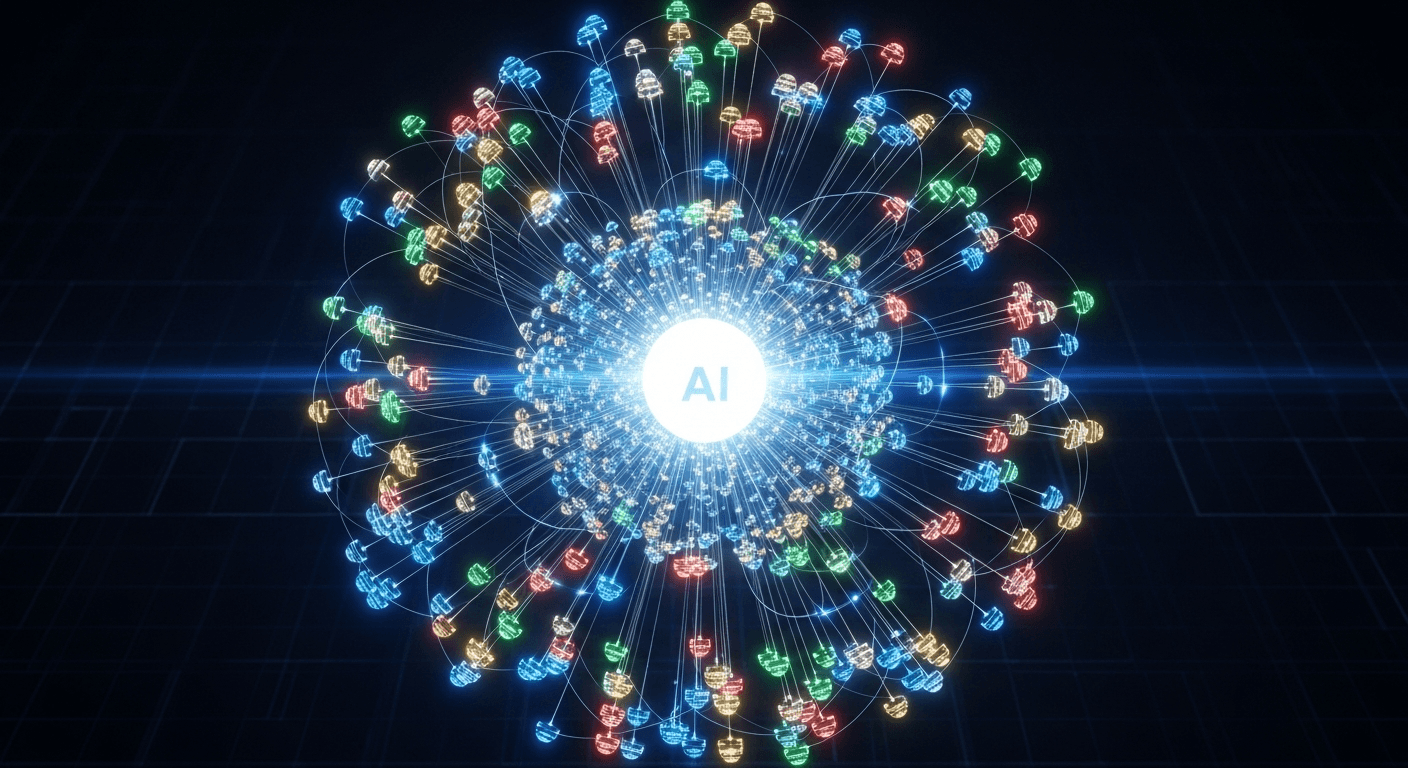
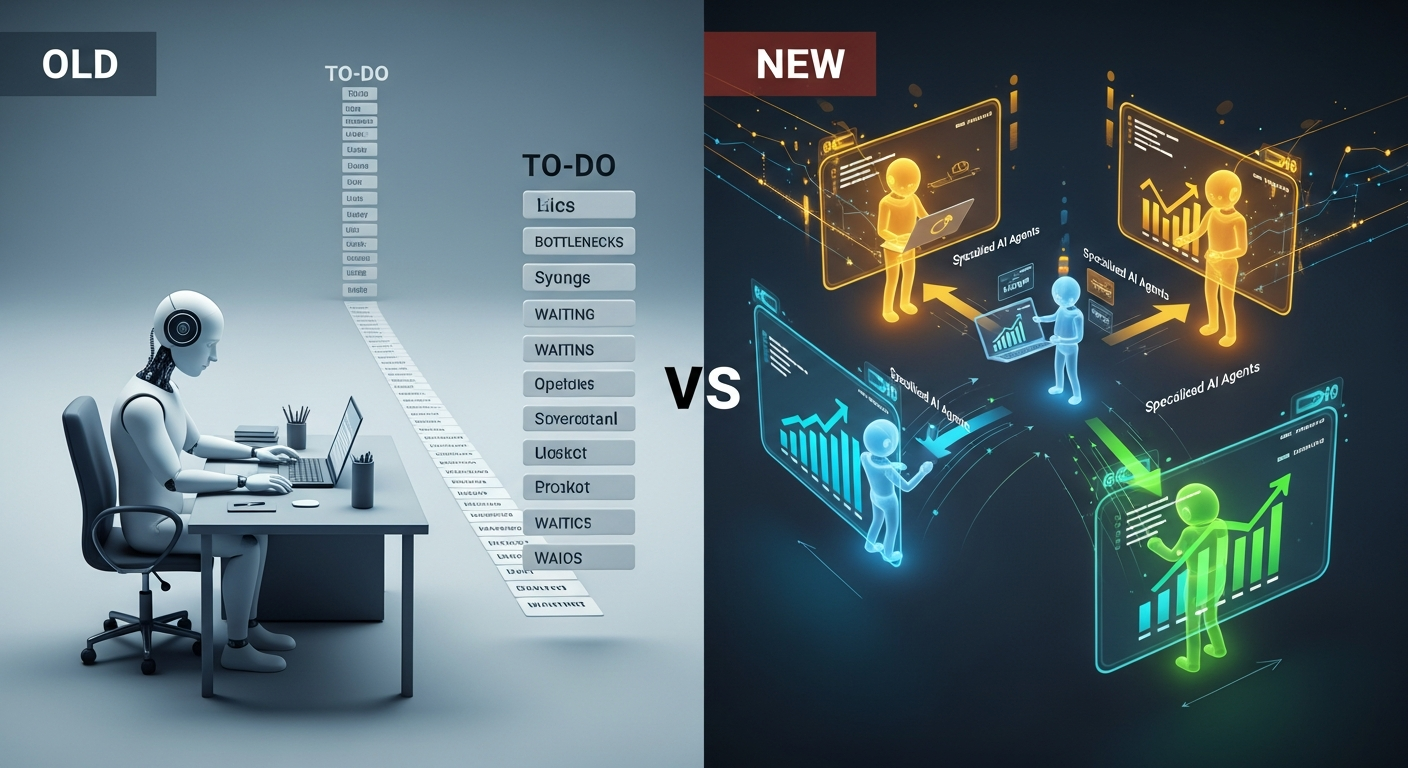
First: Agent Swarm. When you give K2.5 a complex task, it doesn't execute steps sequentially like other AI assistants. Instead, a built-in orchestrator dynamically creates up to 100 specialized sub-agents that work in parallel, executing up to 1,500 tool calls simultaneously.
The result? Complex workflows complete 4.5x faster than single-agent systems.
Second: Native Multimodality. K2.5 wasn't trained on text first with vision added later. It was trained from the ground up on mixed visual and text data—15 trillion tokens worth. This enables genuine video-to-code: record your screen showing a website, and K2.5 will clone it, animations and all.
Third: The Price. At $0.60 per million input tokens versus $6+ for competitors, K2.5 is approximately 10x cheaper. And it's open-source under a Modified MIT license.
Agent Swarm: The Real Innovation
The Agent Swarm architecture represents a fundamental shift in how AI systems handle complexity. Here's how it works:
- You provide a complex task
- The orchestrator analyzes and decomposes it into parallel sub-tasks
- Specialized sub-agents are dynamically instantiated—each optimized for their specific sub-task
- All agents execute simultaneously
- The orchestrator coordinates results and manages dependencies
Moonshot discovered that naive multi-agent training causes "serial collapse"—the system defaults to single-agent behavior even when parallelization would be faster. Their solution, Parallel-Agent Reinforcement Learning (PARL), prevents this by optimizing for "Critical Steps"—the latency on the longest dependent path, not total operations.
It's project management's critical path method, applied to AI.
Visual Coding: Show, Don't Tell
The video-to-code capability deserves special attention. The traditional workflow for getting AI to build something:
- Describe what you want in text
- Debug misunderstandings
- Iterate through multiple rounds
K2.5's approach:
- Show what you want (screen recording)
- Get a working clone

Developer reactions have been visceral. @scaling01 ranked it first among open-weights models, calling Moonshot "the Anthropic of China" for its "focus on taste and agentic behaviour."
The implications extend beyond convenience. When you can show rather than tell, the barrier to software creation drops dramatically. People who can't describe what they want technically can now demonstrate it visually.
Technical Specifications
| Specification | Value |
|---|---|
| Total Parameters | 1 trillion |
| Active Parameters | 32 billion |
| Specialized Experts | 384 + 1 shared |
| Context Length | 256K tokens |
| Vision Encoder | 400M parameters (MoonViT) |
| Training Data | 15T mixed visual/text tokens |
| License | Modified MIT |
| API Pricing | $0.60/M input, $3/M output |
Kimi Code: The Claude Code Competitor
Alongside K2.5, Moonshot released Kimi Code—an open-source CLI coding agent that directly challenges Anthropic's Claude Code.
Key features include shell mode (Ctrl-K toggle for direct command execution), deep Zsh integration, Agent Client Protocol support for IDE integration, and a 128K context window for handling large codebases. It works with VSCode, Cursor, and Zed.
The pricing story continues here: Kimi Code is approximately 10x cheaper than Claude Code at similar capability levels.

The Tradeoffs Are Real
I want to be honest about limitations.
Speed: K2.5 produces about 34 tokens per second versus Claude's 91. For interactive use cases, this matters.
Production Readiness: Agent Swarm is still in beta, available only to high-tier paid users. Some developers report K2 series models as "painfully slow" and occasionally getting stuck on complex tasks.
Reliability: Multiple sources recommend using GPT-5 for "production code, customer-facing content, and tasks requiring maximum reliability."
The practical guidance: use K2.5 for research, prototyping, and cost-sensitive workloads. Use faster, more reliable models for mission-critical production systems.
Who Is Moonshot AI?
Moonshot (月之暗面, "The Dark Side of the Moon"—a Pink Floyd tribute reflecting Yang's love of classic rock) was founded in March 2023. Yang Zhilin, 31, holds a Carnegie Mellon PhD and co-authored foundational papers on Transformer-XL and XLNet.
The company raised $1 billion at $2.5 billion valuation in Series B, backed by Alibaba and HongShan (formerly Sequoia China). Last month, they picked up another $500 million at $4.3 billion valuation.
What This Means For Builders

For Developers: Start experimenting with K2.5 for prototyping. The 10x cost savings add up quickly. Learn multi-agent patterns now—Agent Swarm represents the future of complex task execution. Try video-to-code for client demos.
For Founders/CTOs: Revisit your AI cost structures. Open-source is now a viable option at the frontier. Consider Kimi Code as a Claude Code alternative for high-volume, cost-sensitive use cases.
For Everyone: Multi-agent orchestration is becoming a valuable skill. The ability to decompose tasks for parallel execution will matter as these architectures become standard.
The Bottom Line
Kimi K2.5 is the first open-source model that genuinely competes at the frontier. Not marginally, not with heavy caveats—genuinely competitive with GPT-5.2 and Claude Opus 4.5.
Agent Swarm introduces multi-agent parallel execution. Native multimodality enables visual coding workflows that were science fiction a year ago. And 10x cheaper pricing applies real pressure to closed model providers.
The open-source ratchet just clicked forward. Each major release raises the floor for everyone. Frontier AI capabilities under permissive licenses become building blocks for the entire industry.
Yang's decision to step in front of a camera for the first time captures something essential: this isn't just a technical achievement. It's a statement that frontier AI belongs in the open.
Resources
Written by
Global Builders Club
Global Builders Club
If you found this content valuable, consider donating with crypto.
Suggested Donation: $5-15
Donation Wallet:
0xEc8d88...6EBdF8Accepts:
Supported Chains:
Your support helps Global Builders Club continue creating valuable content and events for the community.