Claude Code Is Having a Moment. Here's What Most People Are Missing.
How a terminal-based coding tool became the most discussed AI application of early 2026—and what the backlash reveals about the economics of AI at scale.
Claude Code Is Having a Moment. Here's What Most People Are Missing.
How a terminal-based coding tool became the most discussed AI application of early 2026—and what the backlash reveals about the economics of AI at scale.
A Google engineer posted that Claude Code replicated a year of her team's work in one hour. The post got 5.4 million views. Tech Twitter exploded. Founders started DM'ing about "the future of coding."
But after digging through ten sources—from enterprise case studies to frustrated developer forums—I found a more nuanced story than the viral moment suggests.
Claude Code is genuinely transforming how software gets built. Non-programmers are shipping functional apps. Enterprises are integrating it company-wide. But the backlash over usage limits reveals something most coverage ignores: the economics of subsidized AI at scale are colliding with reality.
Here's what I found.

The Viral Claim That Started Everything
Jaana Dogan, principal engineer for Google's Gemini API team, dropped a bomb on January 3rd: "I gave Claude Code a description of the problem, it generated what we built last year in an hour."
5.4 million views. Thousands of retweets. A narrative crystallized: AI can do in an hour what teams spend a year building.
But Dogan's follow-up clarifications—which got far less attention—matter enormously:
- The output was a "toy prototype," not production infrastructure
- Her three-paragraph prompt contained deep domain expertise accumulated over years
- Google's year was mostly spent validating architectural approaches amid organizational misalignment
The real insight isn't that Claude Code writes code fast. It's that development bottlenecks are shifting from implementation to articulation. Dogan could describe the system in three paragraphs because she already knew the answer. A junior engineer couldn't have written that prompt.
Paul Graham noted the tool "cuts through bureaucracy" when organizational indecision paralyzes progress. That's the actual superpower—not replacing human knowledge but bypassing human coordination overhead.
Non-Coders Are Actually Shipping
While engineers debate capabilities, non-programmers are building things they couldn't have imagined creating:
Sam Hindes, an assistant principal at a school for autistic children in Melbourne, created a program to identify which clothes belonged to each of his three daughters. He uploaded photos, and the AI learned to sort laundry automatically. "I've tried to teach myself coding at various points but never stuck with it," he said.
Joe Bacus, a welder in St. Louis, built a personal AI assistant connecting to his calendar, Google Sheets, and Gmail. "I'm a skilled labourer who barely passed high school," he explained. "But over the past few months, I've taught myself to build actual tools for my business."
Anne Haubo Dyhrberg, a finance professor in Delaware, developed five trading simulators for her class in two hours. "I never thought it would be this easy."

This is "vibecoding"—describing what you want in natural language and letting AI handle implementation. The term was coined in early 2025, but Claude Code made it practical by enabling non-technical users to build general-purpose tools, not just use templates.
The common thread: domain expertise. These people succeeded because they knew exactly what they needed. Claude Code gave them implementation capability they lacked, not the ideas themselves.
The Power User Divide
Here's where the story gets complicated.
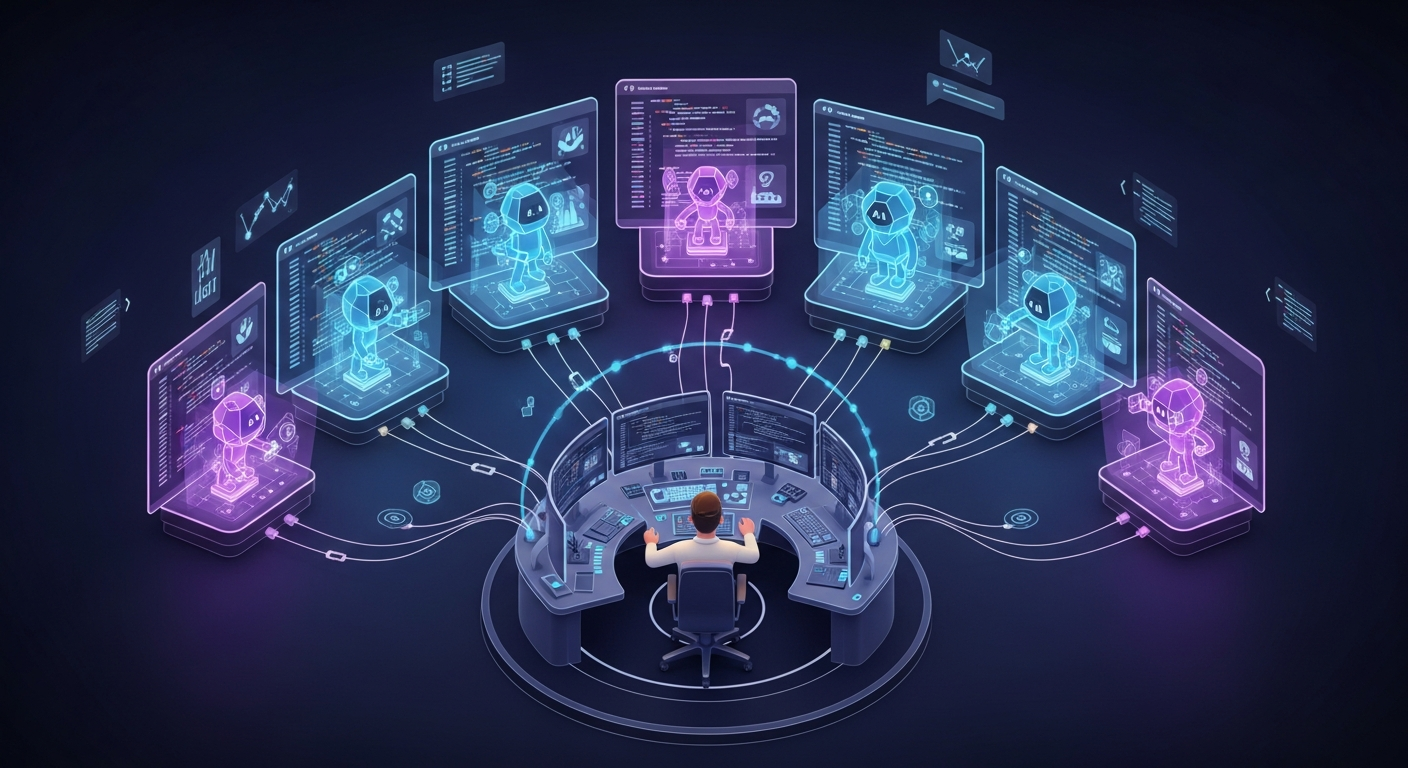
Boris Cherny, Claude Code's creator at Anthropic, recently shared his workflow. It looks nothing like how most people use the tool:
- Runs 5 local sessions on his MacBook terminal + 5-10 on Anthropic's web interface simultaneously
- Each local session uses its own separate git checkout to avoid conflicts
- Exclusively uses Opus 4.5 despite slower speed: "Opus [is] better at tool use"
- Maintains CLAUDE.md files documenting team learnings (2.5k tokens at Anthropic currently)
- Uses Plan mode to iterate on approach before switching to auto-accept edits
- Employs browser automation to test every change: "It opens a browser, tests the UI, and iterates until the code works"
His results: 259 pull requests with 497 commits, adding 40,000 lines of code in 30 days.

That stat only makes sense in context. Cherny isn't simply prompting and accepting output—he's orchestrating a system of parallel workflows, persistent memory, and automated verification. The verification loops alone improve final code quality by 2-3x.
A pattern emerges across the sources I reviewed: users who treat Claude Code as an orchestration layer—configuring tools, defining components, building verification systems—report transformative results. Those treating it as a simple assistant find limitations more apparent.
One developer's blunt assessment: "Reviewing AI-generated code takes longer than writing it yourself. Speed without reliability isn't real productivity."
The gap between these experiences isn't contradiction—it's skill differential. Claude Code has a steeper learning curve than its marketing suggests.
Enterprise Adoption Is Real
While individual developers debate, enterprises are integrating rapidly:
- Microsoft is encouraging engineers across Windows, Microsoft 365, Teams, Bing, Edge, and Surface to adopt Claude Code—even though they sell GitHub Copilot
- Cognizant is deploying Claude to 350,000 employees globally
- Altana reports 2-10x development velocity improvements
- Major clients include Uber, Netflix, Spotify, Salesforce, Accenture, and Snowflake
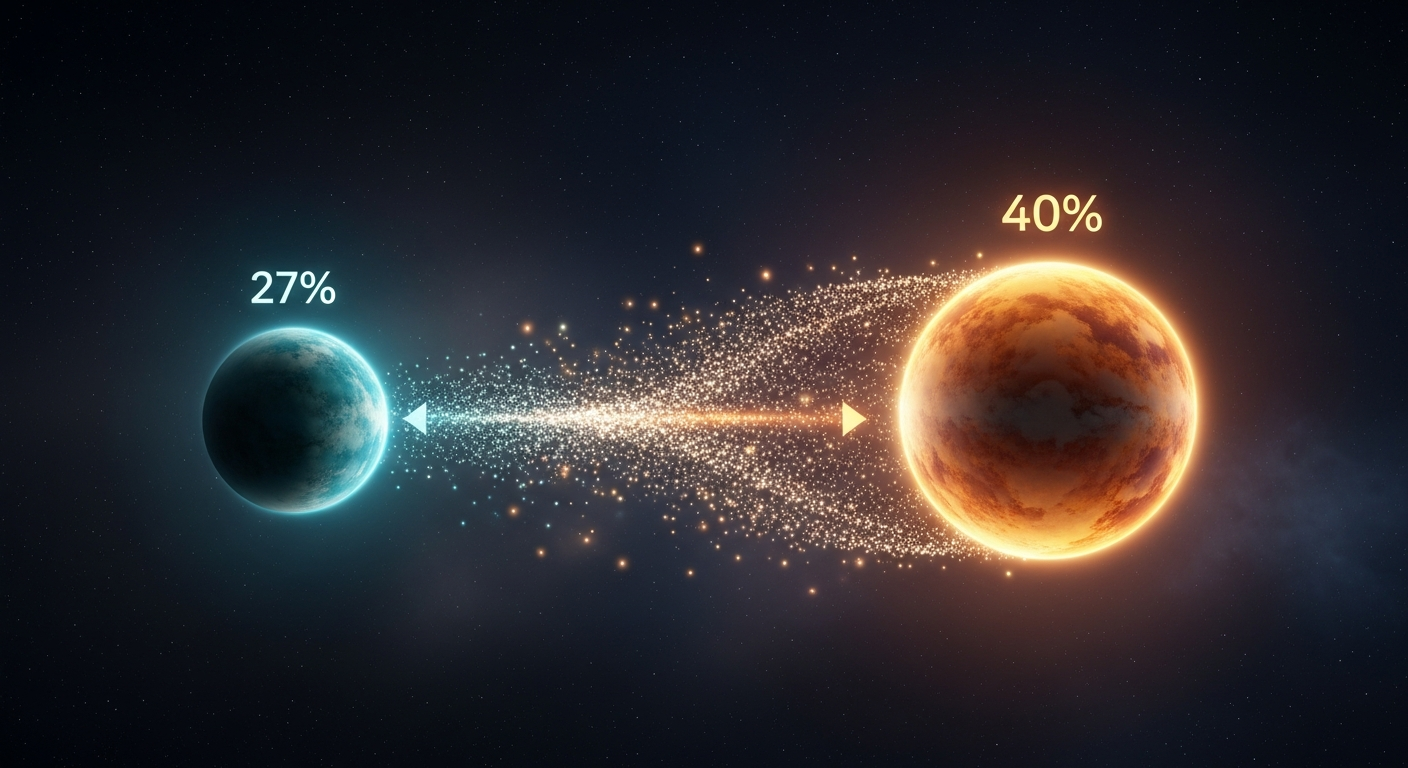
Anthropic now claims 40% enterprise market share, up from essentially zero a few years ago. OpenAI's share dropped from 50% in 2023 to 27% by late 2025.
Jensen Huang called Claude Code "incredible" and urged companies to adopt it. That's notable endorsement given Nvidia's relationships across the AI ecosystem.
The enterprise success stories share common features: dedicated teams, proper configuration, workflow investment, and centralized management through Team/Enterprise plans. Individual developers hitting usage limits face a different reality.
The Backlash Nobody's Talking About
In early 2026, developer sentiment toward Claude Code shifted dramatically. Forums filled with complaints:
- Users report approximately 60% reduction in token limits
- Some hit caps within 10-15 minutes of using Sonnet
- Opus becomes "unavailable shortly after starting"
- Anthropic blocked third-party tools (like OpenCode) from accessing subsidized Max plan tokens
- Criticism allegedly moderated on official Discord channels
One analysis: "The promise of 'unlimited AI' is collapsing in public. This is about economic gravity finally catching up with AI usage at scale—when developers started pushing Claude Code into real workflows with long contexts, retries, refactors, and multi-file reasoning, the math stopped working."
The criticism feels harsh but reflects market correction. AI capabilities have been artificially subsidized to drive adoption. That subsidy is ending, and users who built workflows around "unlimited" access are frustrated.
Expect pricing models to evolve toward usage-based or tiered structures. "Unlimited" plans at current capability levels are economically unsustainable.
The Role Transformation Nobody Prepared For
Perhaps the most significant finding: Claude Code is redefining what it means to be a developer.
As one practitioner noted: "You have now become part code reviewer and part product manager. The code is no longer yours, BUT it's still your responsibility to ensure whatever goes into master is of high enough quality."
If you're not prepared for that role shift, Claude Code will frustrate you. If you embrace it, you might find yourself more productive than ever.
Anthropic's CEO suggested the industry may reach a point where AI handles "most, maybe all" engineering tasks within 6-12 months. Whether that's prediction or provocation, the direction is clear: developers who cling to "writing code" as their identity will struggle. Those who see themselves as architects, evaluators, and articulators will thrive.
What To Do With This
If you're a developer:
- Invest in CLAUDE.md and workflow configuration—the compound returns are documented
- Learn to evaluate AI output critically—this is becoming your core value
- Consider specializing in verification, architecture, or domain expertise
- Budget for actual usage; "unlimited" plans are not
If you're a non-technical builder:
- Claude Code genuinely works for building functional tools
- Start with well-defined problems where you have domain expertise
- Expect to iterate and learn prompt engineering basics
- Consider Cowork (Anthropic's new non-developer tool) for file-based tasks
If you're in enterprise:
- Claude Code integration yields measurable productivity gains
- Plan for hybrid workflows (Copilot + Claude Code + human review)
- Develop internal best practices and CLAUDE.md standards
- Budget for usage growth—adoption creates demand
The Bottom Line
Claude Code in January 2026 represents both a capability breakthrough and a market correction. The tool has genuine transformative potential. But it rewards sophisticated workflows far more than simple prompting, and the economics of "unlimited" AI access are unsustainable.
The gap between power users and casual users is widening. The role of the developer is transforming from code writer to architect and evaluator. The backlash over usage limits reveals the true cost of AI at scale.
Claude Code isn't the end of programming—it's the beginning of a new kind. Whether that future excites or concerns you probably depends on how willing you are to adapt.
Sources: Fortune, InfoQ, The Star Malaysia, DEV Community, WebProNews, PPC Land, The Register, F22 Labs, and 200+ social media testimonials.
Written by
Global Builders Club
Global Builders Club
If you found this content valuable, consider donating with crypto.
Suggested Donation: $5-15
Donation Wallet:
0xEc8d88...6EBdF8Accepts:
Supported Chains:
Your support helps Global Builders Club continue creating valuable content and events for the community.