Build While You Sleep: The Complete Guide to OpenClaw Automation
How developers are shipping complete projects overnight with 5 minutes of human involvement using Ralph Loops, cron jobs, and autonomous AI agents.
Build While You Sleep: The Complete Guide to OpenClaw Automation
How developers are shipping complete projects overnight with 5 minutes of human involvement.
You ask your AI to build something. It starts strong. Scaffolds files. Then asks a clarifying question. You answer. It writes code, hits an error, tries to fix it, breaks something else. You're 45 minutes in, context is bloated, and now it's forgotten half of what it built.
"Let me start fresh," it says.
Sound familiar?
Here's the truth: your AI is smart enough to build complex things. It just doesn't have the workflow to finish them. The problem isn't intelligence—it's memory.
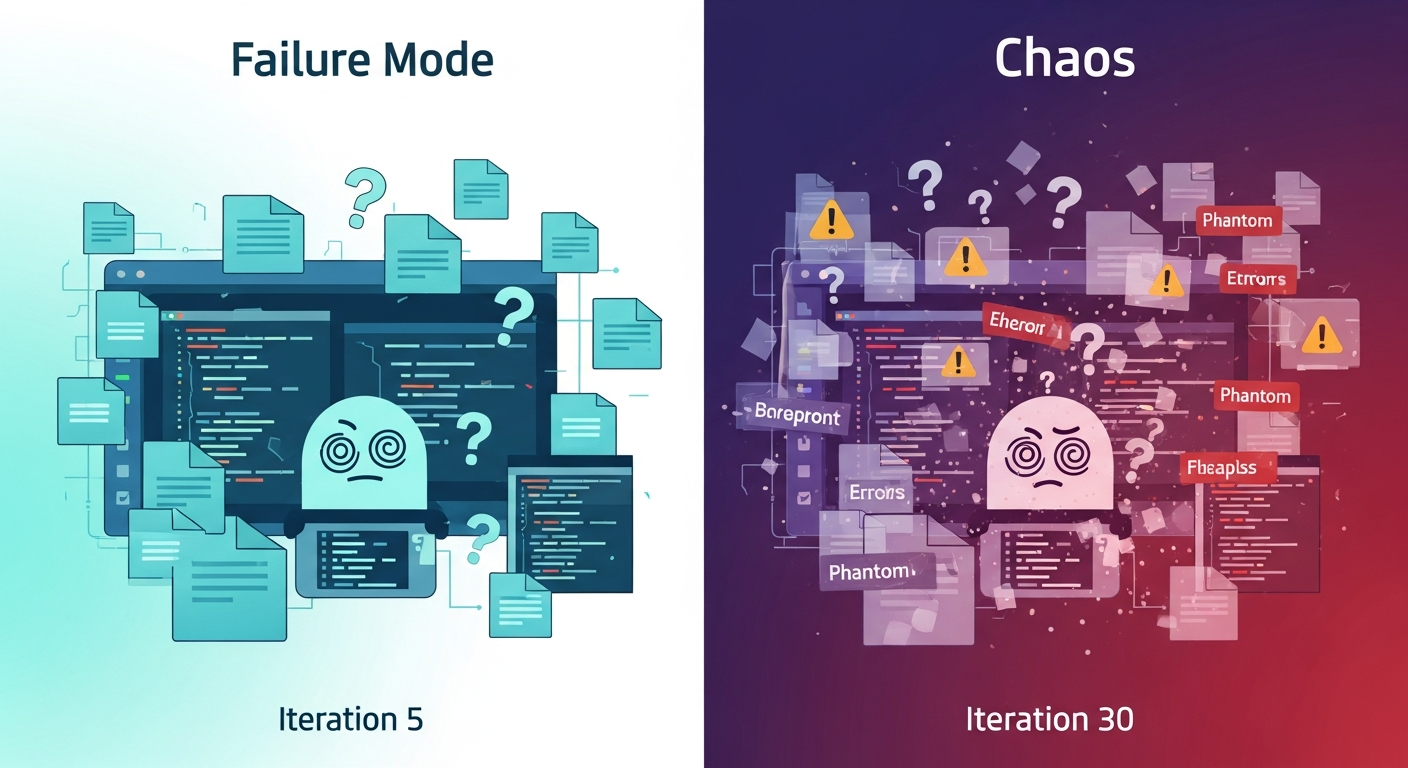
By iteration 15, your AI is juggling conflicting codebase versions. By iteration 25, it's editing files that don't exist. By iteration 30, it suggests starting over because its context is so polluted it can't tell what's real anymore.
The solution isn't a smarter model. It's a smarter loop.

The Overnight Build Pattern
Last week, an AI named Q built an entire monitoring dashboard:
- Express server
- Real-time UI
- WebSocket connections
- Cost tracking
- Transcript viewer
73 iterations over 6 hours.
Human involvement:
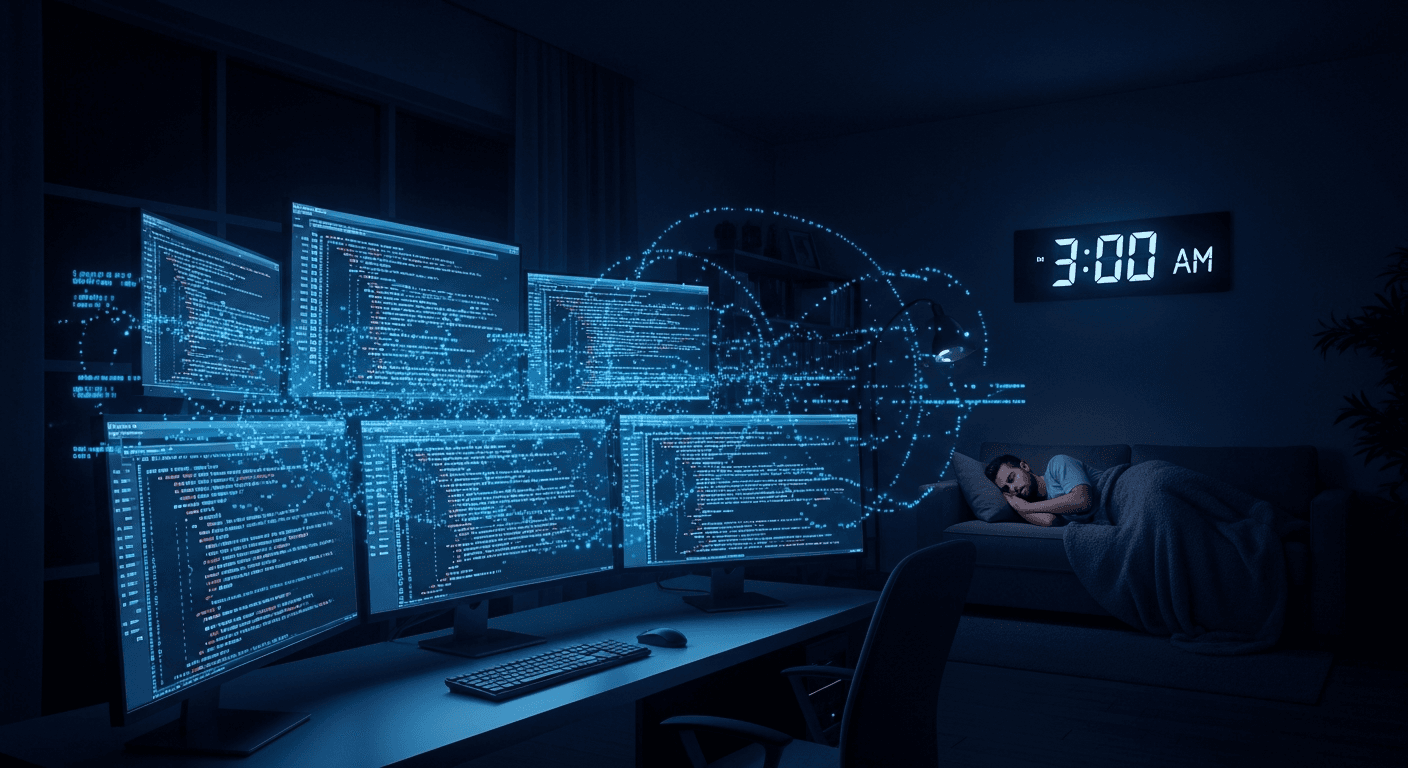
- 8:23 PM — Kicked off the loop, went to dinner
- 10:45 PM — Glanced at dashboard (iteration 41, no errors), went to bed
- 6:30 AM — Woke up to working code. Tested it. Shipped it.
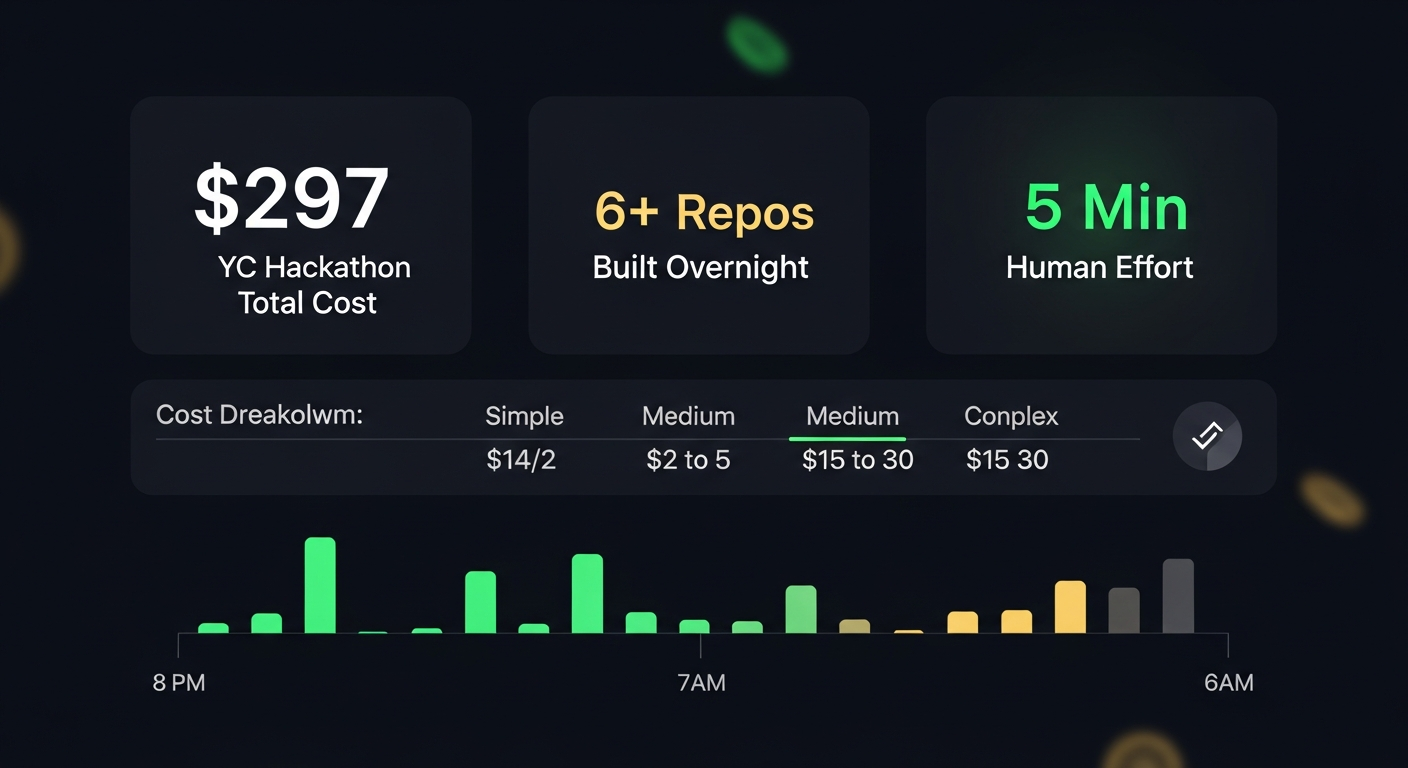
Total human effort: 5 minutes.
Without the right workflow, this would've been a weekend project—babysitting every file, restarting context four times, and debugging the debugging.
The Key Insight: State Lives in Files, Not Context
The technique is called Ralph Loops, named after Geoffrey Huntley's methodology for making AI agents actually complete complex work.
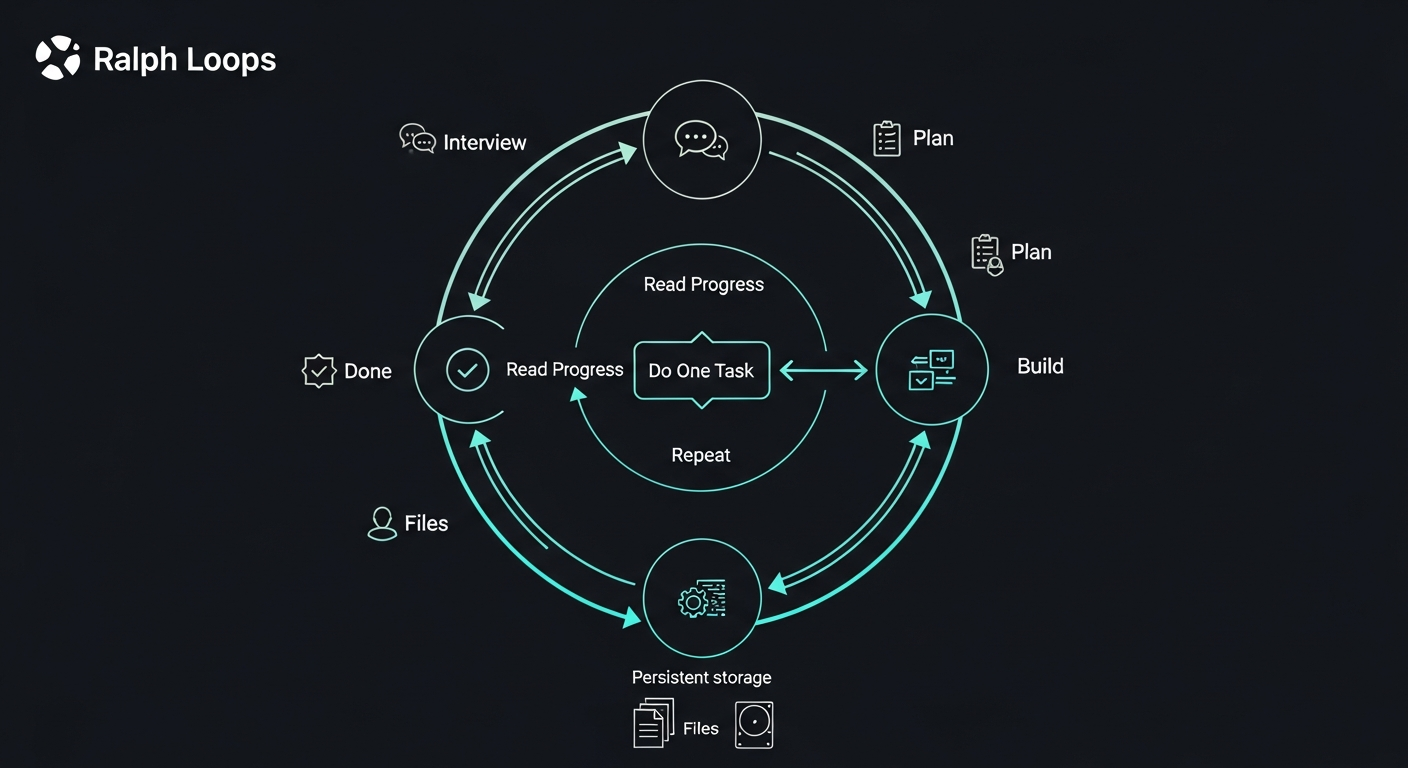
Each iteration:
- Read the progress file (ground truth)
- Do ONE task
- Save state
- Repeat
No context pollution. No accumulated confusion. Just steady progress until done.
Four Ways to Automate with OpenClaw
1. Ralph Loops: Autonomous Overnight Builds
The most powerful pattern for complex projects.
The Four Phases:
| Phase | What Happens | Output |
|---|---|---|
| Interview | Agent asks you questions | specs/*.md |
| Plan | Breaks specs into tasks | IMPLEMENTATION_PLAN.md |
| Build | One task per iteration | Working code + tests |
| Done | Emits completion signal | Verified finish |
Install and run:
clawdhub install ralph-loops
cd skills/ralph-loops/dashboard && npm install
node skills/ralph-loops/dashboard/server.mjs  # Dashboard at :3939
node skills/ralph-loops/scripts/ralph-loop.mjs \
  --prompt /path/to/task.md --max 50 --name "My Build"
Economics:
| Complexity | Iterations | Cost | Time |
|---|---|---|---|
| Simple task | ~10 | ~$0.50 | ~15 min |
| Medium project | ~30 | $2–5 | 1–2 hrs |
| Complex build | 100+ | $15–30 | 4–8 hrs |
2. Cron Jobs: Scheduled Daily Automation
OpenClaw's built-in scheduler for recurring tasks.
Morning Briefing:
openclaw cron add --name "Morning briefing" \
  --cron "0 7 * * *" \
  --tz "America/Los_Angeles" \
  --session isolated \
  --message "Weather, calendar today, top 3 emails, news summary" \
  --deliver --channel whatsapp --to "me"
Email Processing (3x daily):
openclaw cron add --name "Inbox triage" \
  --cron "0 9,14,18 * * *" \
  --session isolated \
  --message "Process inbox: categorize, draft responses, flag urgent"
Key: Use isolated sessions for frequent tasks to prevent context buildup.
3. Skills: Task-Specific Automation
OpenClaw has 100+ pre-built skills for common workflows.
Email & Calendar:
morning-email-rollup— Daily email summary at 8amcalctl— Apple Calendar managementgcal-pro— Google Calendar with natural languageremind-me— Natural language → cron jobs
DevOps:
- GitHub integration for codebase management
- Kubernetes autoscaling, backup, multi-cluster
- Cloudflare DNS, cache, Workers
Skill Chaining:
Monitor emails for flight receipt
  → Extract flight info
  → Add to Google Calendar
  → Set check-in reminder
4. The Original Ralph: Pure Bash Loop
Geoffrey Huntley's foundational technique:
while :; do cat PROMPT.md | claude-code ; done
That's it. A while loop that pipes a prompt to an AI agent repeatedly.
Huntley's advanced setup:
- Pre-commit hooks and property-based tests
- Agents auto-push to master (no branches)
- Feedback loops that self-repair failures
- "I don't review the code. The agents autonomously push to master."
Built CURSED, a complete programming language, using this technique.
Best Practices
For Overnight Builds
- Set max iterations — Prevent runaway API costs
- Solid test suites — Enable autonomous validation
- One task per iteration — Prevent cascading breakage
- Tune prompts, not tools — Errors are feedback
For Cron Automation
- Isolated sessions for frequent tasks
- Explicit timezone with
--tz - Test with
--forcebefore relying on schedule - Auto-delete one-shots with
--delete-after-run
For Parallelization
The real productivity multiplier: throughput, not speed.
While Agent A works on Task 1, work on Task 2 yourself. Or run multiple agents on separate areas of code.
Avoid: Parallel tasks in the same code area (merge conflicts) Embrace: Mentally assign agents to code areas like human teams
The 70/30 Reality
AI can get you 70% of the way. The last 30% is the hard part.
The assistant scaffolds a feature, but production readiness means:
- Edge cases
- Architecture fixes
- Tests
- Cleanup
For juniors, 70% feels magical. For seniors, the last 30% is sometimes slower than writing it clean from the start.
Know which category your task falls into.
Who's Doing This
Geoffrey Huntley — Created the Ralph technique. Built a programming language autonomously. Runs agents that push to master without review.
Peter Steinberger — OpenClaw creator. 6,600+ commits in one month using AI agents. Runs 5-10 concurrent agents on different features.
YC Hackathon Teams — Shipped 6+ complete repositories overnight. Total cost: $297 in API fees.
The Economics
| Scenario | Cost | Result |
|---|---|---|
| YC Hackathon (6 repos) | $297 | Multiple complete projects overnight |
| $50k contract MVP | $297 | Full delivery |
| Monitoring dashboard | ~$15 | 73 iterations, 6 hours |
| This article | $3.80 | 47 iterations |
What's Next
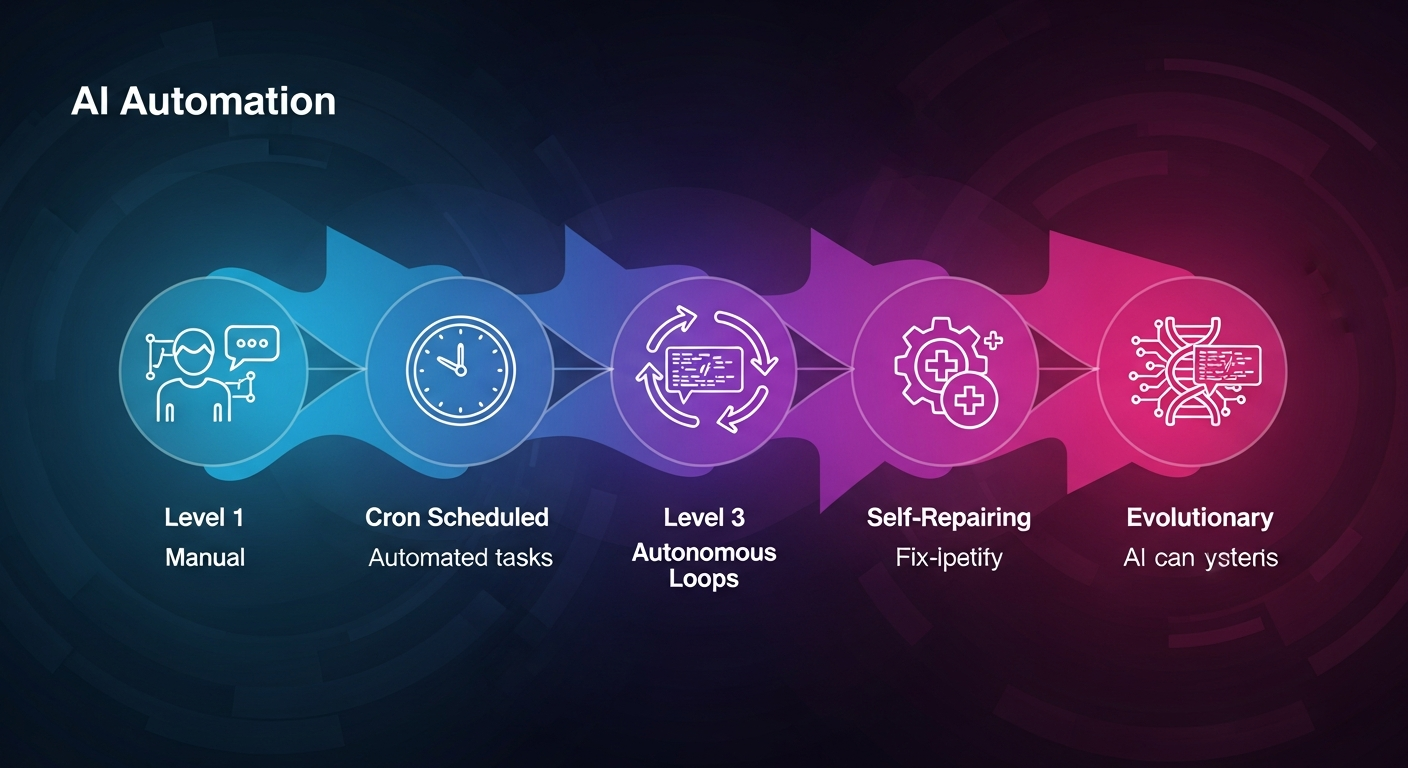
Near-Term (2026)
- Ralph-style loops become standard practice
- OpenClaw skills ecosystem expands
- More overnight build success stories
Medium-Term (2027-2028)
- Self-repairing loops become common
- Multi-agent coordination matures
- "AI development teams" emerge
Long-Term
Huntley is building "Loom"—infrastructure for evolutionary software where autonomous loops optimize for revenue generation.
Quick Start
Tonight's Experiment
-
Install Ralph Loops:
clawdhub install ralph-loops -
Start the dashboard:
cd skills/ralph-loops/dashboard && npm install node server.mjs -
Define a task in a markdown file
-
Run the loop:
node scripts/ralph-loop.mjs --prompt task.md --max 30 --name "Test Build" -
Go to sleep
-
Wake up to working code
The Bottom Line
The build-while-you-sleep paradigm isn't science fiction. It's shipping code today.
The techniques:
- Ralph Loops for complex overnight builds
- Cron jobs for scheduled daily automation
- Skills for task-specific workflows
- Parallelization for throughput multiplication
The key principles:
- State persistence beats context memory
- Isolated sessions prevent confusion
- Prompt tuning is the skill to develop
The question isn't whether autonomous coding works. It's whether you're using it yet.
Resources: Ralph Loops on ClawHub | Geoffrey Huntley's Ralph | OpenClaw Cron Docs
Written by
Global Builders Club
Global Builders Club
If you found this content valuable, consider donating with crypto.
Suggested Donation: $5-15
Donation Wallet:
0xEc8d88...6EBdF8Accepts:
Supported Chains:
Your support helps Global Builders Club continue creating valuable content and events for the community.