
I Tested OpenCode vs Claude Code for a Week. Here's What Actually Matters.
The AI coding agent showdown, beyond the hype. When using the same model, code quality is indistinguishable—the differences are about workflow.
I Tested OpenCode vs Claude Code for a Week. Here's What Actually Matters.
The AI coding agent showdown, beyond the hype
Everyone told me Claude Code was the gold standard. "It just works," they said. "Nothing else comes close."
Then I spent a week using both Claude Code and OpenCode on real projects. What I found challenges the conventional wisdom: when using the same underlying model, the code quality is indistinguishable. The differences are about workflow, not magic.
Let me break down what actually matters.

The Uncomfortable Truth About "Superiority"
Claude Code has 47,000 GitHub stars. OpenCode has 48,000. But here's the number that made me pause: OpenCode grew from 44,000 to 48,000 stars in five days. That's not gradual adoption—that's a stampede.
Why the sudden shift? Developers are realizing something the marketing doesn't tell you: Claude Code's perceived superiority comes from engineering polish, not proprietary model advantages. When OpenCode runs with Claude's Sonnet 4, testers report they "can't tell the difference" in code quality.
So what IS different?
Speed vs Thoroughness: Pick Your Philosophy
I ran both tools through identical refactoring tasks. The results:
- Claude Code: 9 minutes 9 seconds
- OpenCode: 16 minutes 20 seconds
Claude Code is nearly twice as fast. Case closed, right? Not quite.
Look at what happened during test generation:
- Claude Code: Wrote 73 tests, verified those specific tests passed, moved on
- OpenCode: Wrote 94 tests, ran the entire suite of 200+ existing tests to check for regressions
This isn't a bug in OpenCode—it's a design philosophy. Claude Code optimizes for velocity: complete the task, verify it works, ship it. OpenCode optimizes for thoroughness: validate everything, ensure no regressions, guarantee the codebase is healthy.
Which matters more depends on your context. Solo developer on a deadline? Claude Code. Team with CI/CD and code review? OpenCode's extra 7 minutes might save hours of debugging production issues.

The Real Moat: Context Management
Here's where Claude Code genuinely leads—and it has nothing to do with Claude the model.
Claude Code has built sophisticated context management:
Subagents let you farm out work to specialized agents that run in isolated context windows. Complex task needs 50k tokens of context? The subagent handles it and returns a 500-token answer, keeping your main conversation clean.
Skills are auto-invoked helpers. Unlike slash commands that you trigger manually, skills activate when Claude detects they're relevant. It's the difference between remembering to run your formatter and having it happen automatically.
Hooks provide event-driven automation. PreToolUse hooks run before Claude takes action—perfect for validation. PostToolUse hooks run after—perfect for auto-formatting or test execution.
MCP Tool Search is perhaps the most impressive: it reduces tool token usage by 85% (from 134k to 5k in Anthropic's testing) by lazy-loading tool definitions.
OpenCode has multi-session support, auto-compaction, and Plan Mode. It's catching up. But today, Claude Code's context engineering is more mature.
Where OpenCode Wins Decisively
Model flexibility isn't a feature—it's OpenCode's entire value proposition.
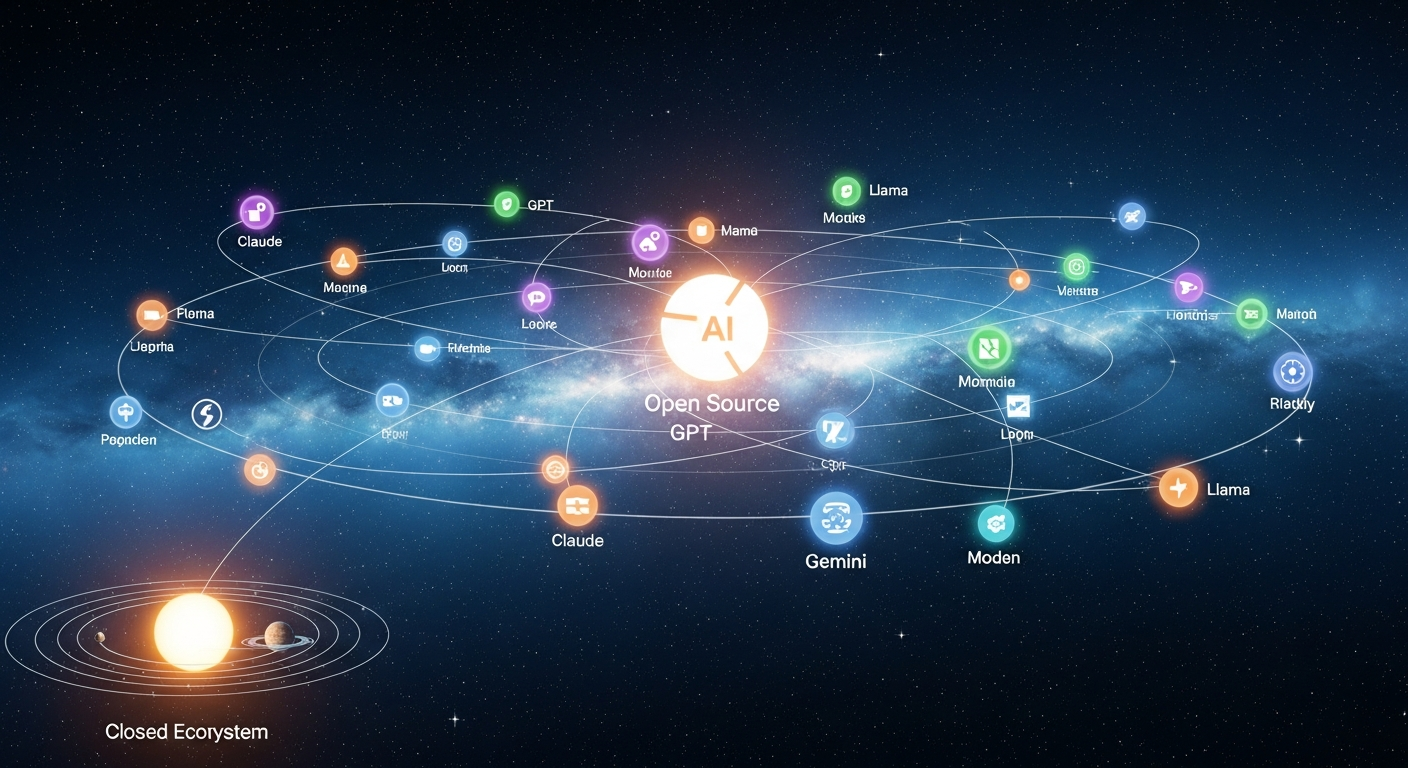
Claude Code locks you into Anthropic's ecosystem. OpenCode supports 75+ providers:
- Claude (Anthropic)
- GPT-4, GPT-4o (OpenAI)
- Gemini Pro, Gemini 2.0 (Google)
- Llama, Mistral, Qwen (local via Ollama)
- Grok, GLM (free tiers)
- Enterprise options (AWS Bedrock, Azure OpenAI)
This matters for three reasons:
Cost optimization. OpenCode lets you route different tasks to different models. Use Claude for complex reasoning, Gemini for bulk processing, local models for sensitive code. Claude Code forces you to use Claude for everything.
Privacy and compliance. For code that can't leave your organization—financial services, healthcare, defense—OpenCode with local models is the only option. This isn't a niche; it's enterprise reality.
Future-proofing. If a better model emerges (and it will), OpenCode users switch in a configuration change. Claude Code users are stuck.
The GitHub Integration Gap
OpenCode has a feature that makes me jealous: native GitHub Actions integration.
Mention /opencode or /oc in any issue or PR comment, and OpenCode will:
- Triage issues and explain what's happening
- Create branches and implement changes
- Open PRs with all modifications
- Respond to inline code comments with precise file and line context
Claude Code can do CI/CD with headless mode, but it requires more orchestration. OpenCode's approach is more elegant for GitHub-native workflows.
The Bug That Matters
I have to mention this: OpenCode with all tested models—Sonnet 4, Gemini Pro, GPT-4.1—reformatted existing code without authorization.
Claude Code doesn't do this.
For mature codebases with established style guides, this is a trust issue. You can mitigate it with rules in AGENT.md, but it shouldn't be necessary. The OpenCode team is likely aware; I expect a fix soon.
The Pricing Reality
Here's how the costs actually shake out:
Claude Code:
- Pro: $20/month
- Max 5x: $100/month
- Max 20x: $200/month
- Average developer:
$6/day ($130/month)
OpenCode:
- Tool: Free
- Claude API: Same as Claude Code API pricing
- Free providers (Grok, GLM): $0
- Local models: $0 (hardware costs only)
For heavy Claude users, the subscription often beats API pricing. But OpenCode's flexibility means you can optimize ruthlessly—free models for exploration, paid models for production work.
So Which One Should You Use?
There's no universal winner. Here's my decision framework:
Use Claude Code if:
- You already have a Claude Pro/Max subscription
- Speed matters more than thoroughness
- You value polish and "it just works"
- You need enterprise support (Bedrock/Vertex integration)
Use OpenCode if:
- You're budget-conscious
- You need local models (privacy, compliance, air-gapped)
- You want model flexibility (try different providers)
- GitHub-native CI/CD matters to you
- You value open source and community contribution
The simplest heuristic: If you have time to experiment, try OpenCode with Sonnet 4. You'll get 90% of Claude Code's experience with more flexibility. If you need something that "just works" today, Claude Code remains the safer choice.
The Prediction
By mid-2026, I expect these tools to converge. Claude Code will add (limited) multi-provider support under competitive pressure. OpenCode will fix its polish issues and match Claude Code's context management.
The real winners? Developers. Competition is making both tools better faster than either company could alone.
For the complete technical comparison including pricing breakdowns, benchmark methodology, and feature matrices, see my full analysis [link].
Written by
Global Builders Club
Global Builders Club
If you found this content valuable, consider donating with crypto.
Suggested Donation: $5-15
Donation Wallet:
0xEc8d88...6EBdF8Accepts:
Supported Chains:
Your support helps Global Builders Club continue creating valuable content and events for the community.