Your AI Should Know Your Goals: An Introduction to Personal AI Infrastructure
How to build an AI that remembers, learns, and works alongside you
Your AI Should Know Your Goals: An Introduction to Personal AI Infrastructure
How to build an AI that remembers, learns, and works alongside you
Every time you start a new ChatGPT conversation, you're talking to a stranger.
It doesn't matter that you've had a thousand conversations before. It doesn't remember your goals, your preferences, or that you've explained your project three times already. You start from zero. Every. Single. Time.
This is broken. And there's a better way.
The Problem with Today's AI
Think about how you interact with AI right now:
- You open ChatGPT or Claude
- You explain your context (again)
- You get a response
- You close the tab
- Tomorrow, you start over
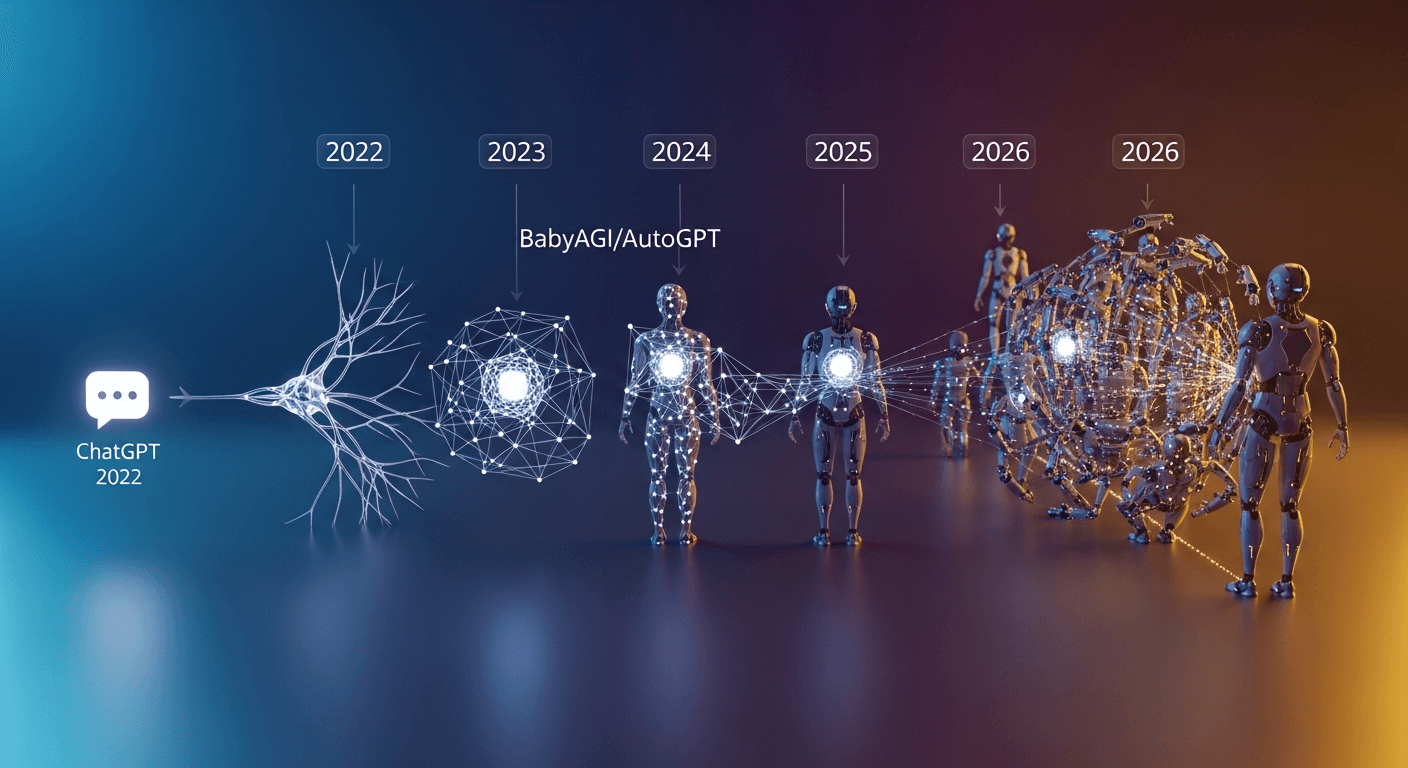
This is what Daniel Miessler calls the "Chatbot Era"—and we're stuck in it.
But here's the thing: we don't have to be. The technology to build AI that actually knows you—your goals, your projects, your communication style—exists today. It's called Personal AI Infrastructure, or PAI.
What is Personal AI Infrastructure?
PAI is a framework for building AI systems that function as persistent assistants rather than stateless tools.
The difference is profound:
Chatbot: Ask → Answer → Forget
PAI: Know Your Goals → Work Together → Learn → Get Better
With PAI, your AI maintains:
- Memory of who you are and what you're working toward
- Context that carries across sessions
- Learning from what works and what doesn't
- Tools to actually execute on your behalf
As Miessler puts it: "The infrastructure around the model matters more than the model's raw intelligence."
The Seven Components
Every Personal AI Infrastructure needs seven things:
1. Intelligence
Not just the model—the entire scaffolding that guides it. This includes context management, skills, hooks, and steering rules that shape how your AI thinks.
2. Context
A three-tier memory system:
- Session data (what we're doing now)
- Work progress (projects and criteria)
- Learning signals (what's worked over time)
3. Personality
How your AI expresses itself. Quantified traits, voice identity, communication style. Your AI should feel consistent, not randomly different each time.
4. Tools
What your AI can actually do. Skills for specific domains, connections to external services, patterns for common tasks.
5. Security
Defense-in-depth. Your AI has access to sensitive information—protect it with constitutional principles, validation, and safe defaults.
6. Orchestration
How everything works together. Hooks that fire at lifecycle events, pipelines for context loading, coordination between multiple agents.
7. Interface
How you interact. CLI-first for developers, voice for convenience, emerging AR and gesture capabilities for the future.
The TELOS System: Teaching AI Who You Are
The heart of PAI is the TELOS system—10 markdown files that capture your identity:
- MISSION.md - Your core purpose
- GOALS.md - What you're trying to achieve
- PROJECTS.md - Active work streams
- BELIEFS.md - Fundamental assumptions
- MODELS.md - Mental frameworks you use
- STRATEGIES.md - Approaches you prefer
- NARRATIVES.md - Stories that guide you
- LEARNED.md - Accumulated wisdom
- CHALLENGES.md - Obstacles you face
- IDEAS.md - Things worth exploring
This isn't just documentation. Your AI actively uses these files to make decisions aligned with your goals.
When you ask for help with a project, your AI doesn't just respond generically—it knows which project, what your challenges are, and what approaches have worked for you before.
Memory: The Missing Piece
The single biggest difference between chatbots and PAI is memory.
Without memory:
- Every session starts fresh
- You repeat context constantly
- AI can't personalize
- Learning is impossible
With memory (using tools like Mem0):
- User preferences persist
- Conversation context carries over
- AI adapts to your style
- Every interaction teaches the system
Mem0, a memory layer that raised $24M in 2025, claims +26% accuracy improvement and 90% reduction in token usage compared to full-context approaches.
The technical implementation is straightforward:
from mem0 import Memory
memory = Memory()

# Store interactions
memory.add(messages, user_id=user_id)

# Retrieve relevant context
memory.search(query=message, user_id=user_id)
Three lines of code transform a stateless agent into a learning system.
The Employee Model: AI as Teammate
One of PAI's most powerful concepts is the "Employee Model"—treating AI as part of an organizational hierarchy:
Tier 1: Humans Strategy and creative direction. Final decisions.
Tier 2: Digital Assistants (DAs) Personal AI systems—one per human.
Tier 3: Employee Agents Task-focused AI workers serving the organization.
At Miessler's company Unsupervised Learning, this isn't theoretical:
- Humans (Daniel, Matt) set direction
- DAs (Kai, Veegr) support each human
- Employees (Kain, Finn, Mira, Teegan) execute tasks
All workers—human and AI—read from the same GitHub task list. Close issues with the same evidence standards. Update the same SOPs.
The AI doesn't replace humans. It multiplies what humans can accomplish.
How to Get Started
If You're Non-Technical
Start simple. Use a platform like Lindy or Voiceflow. Pick 2-3 specific tasks you want automated. Connect your email and calendar. Write a short document describing your goals and feed it to your AI. Iterate daily.
If You're a Developer
Use Claude Code. Create a CLAUDE.md file in your project root:
# My Personal AI Infrastructure

## Who I Am
[Your role and goals]

## How I Work
[Coding conventions, tools, preferences]

## Current Projects
[What you're working on]
Add skills in .claude/skills/. Configure hooks in .claude/settings.json. The infrastructure lives in your project directory—no separate systems required.
If You Want the Full System
Install PAI directly:
git clone https://github.com/danielmiessler/PAI.git
cd PAI/Releases/v2.5
cp -r .claude ~/
cd ~/.claude && bun run PAIInstallWizard.ts
Complete the TELOS files. Feed your context. Use it daily.
The Security Reality
Personal AI has unprecedented access to your life. Emails. Files. Credentials. Memory.
Unlike one-shot chat sessions, PAI runs continuously. That's power—and risk.
Best practices:
- Review what access you're granting
- Use policy-based validation
- Keep sensitive credentials separate
- Start with limited permissions
- Monitor for unexpected behavior
Don't skip this. The same capabilities that make PAI powerful make it a target.
What's Coming
We're at an inflection point. The Chatbot Era is ending. The Agent Era is maturing. The Assistant Era—where AI functions as a named, trusted companion that proactively pursues your goals—is beginning.
The Personal AI Maturity Model predicts the endpoint: trusted companions that:
- Know your goals and work toward them continuously
- Remember everything relevant about you
- Learn from every interaction
- Coordinate other AI systems on your behalf
- Function as genuine partners in your life
This isn't years away. The infrastructure exists today. The question is whether you'll build it—or wait for someone else to define how AI augments your life.
Resources
Your AI should know your goals. Now you know how to make that happen.
Written by
Global Builders Club
Global Builders Club
If you found this content valuable, consider donating with crypto.
Suggested Donation: $5-15
Donation Wallet:
0xEc8d88...6EBdF8Accepts:
Supported Chains:
Your support helps Global Builders Club continue creating valuable content and events for the community.